

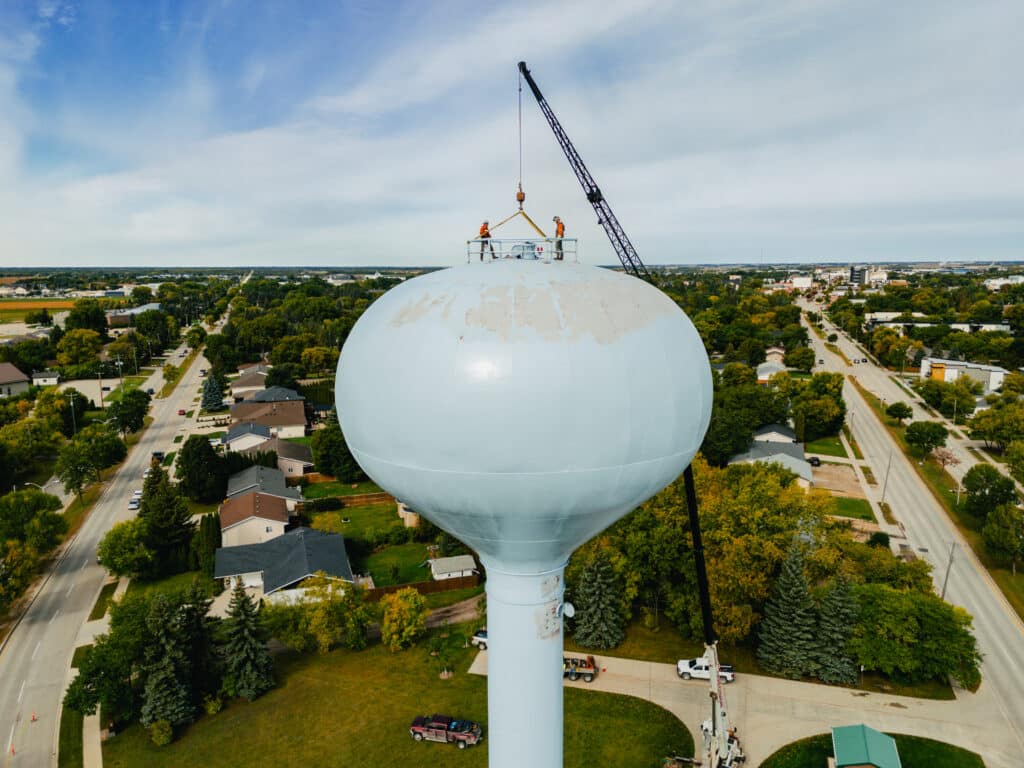
A city planned maintenance on its water tower, but inspections revealed that it needed fall-protection improvements before proceeding. As a working-at-heights specialist, Northern Strands was contacted to provide safer tower solutions that would improve, not impede, workflow.
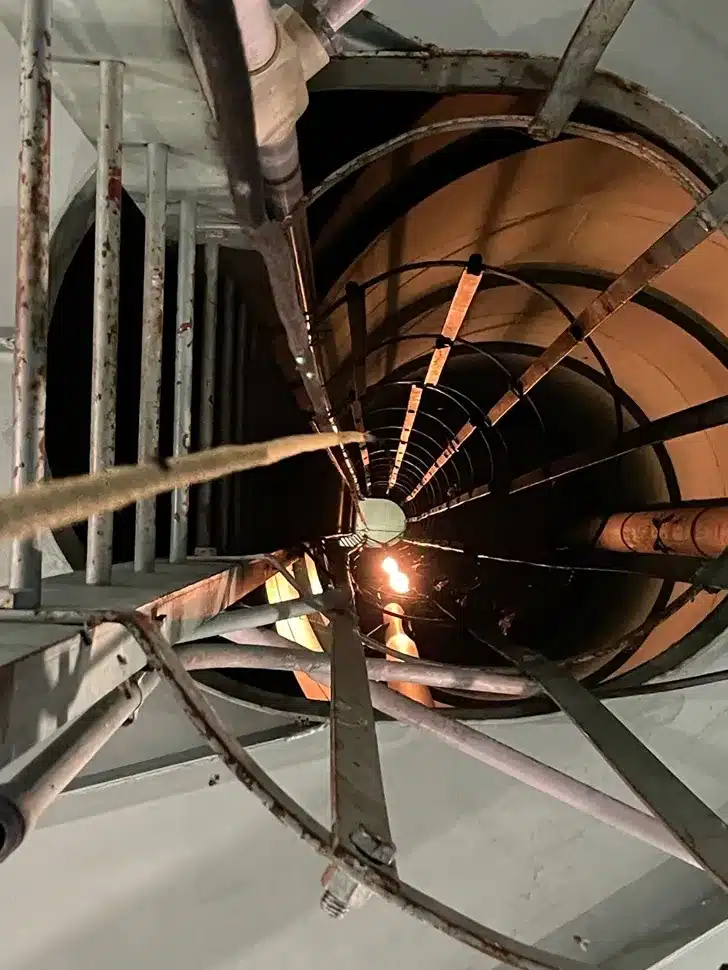
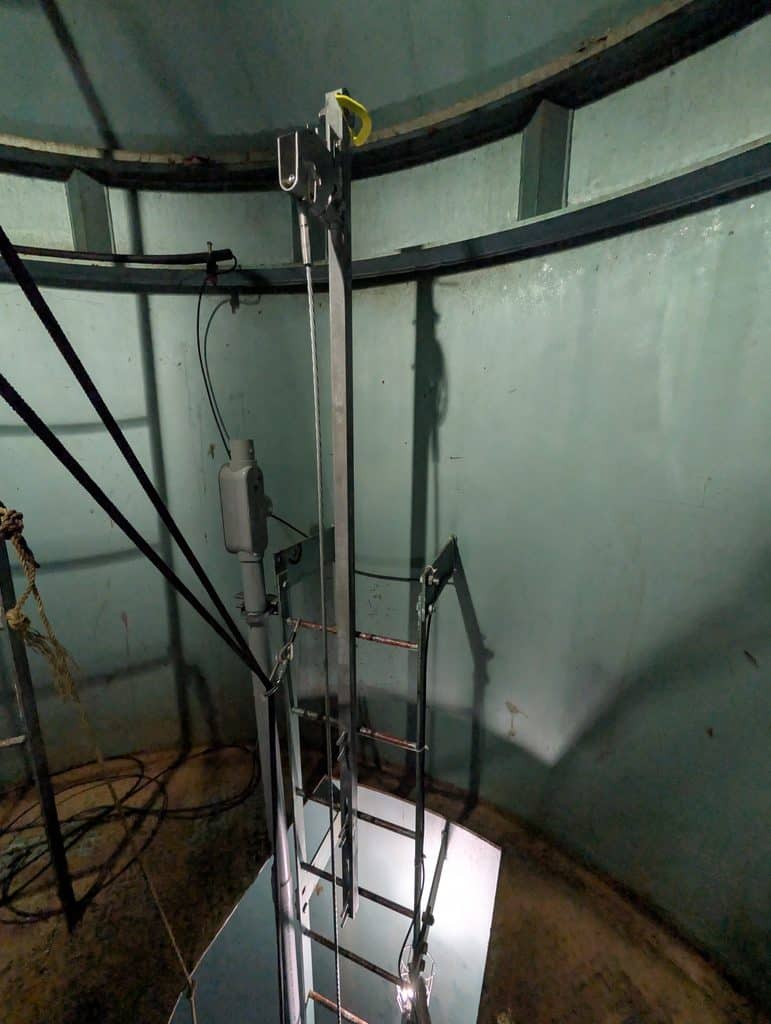
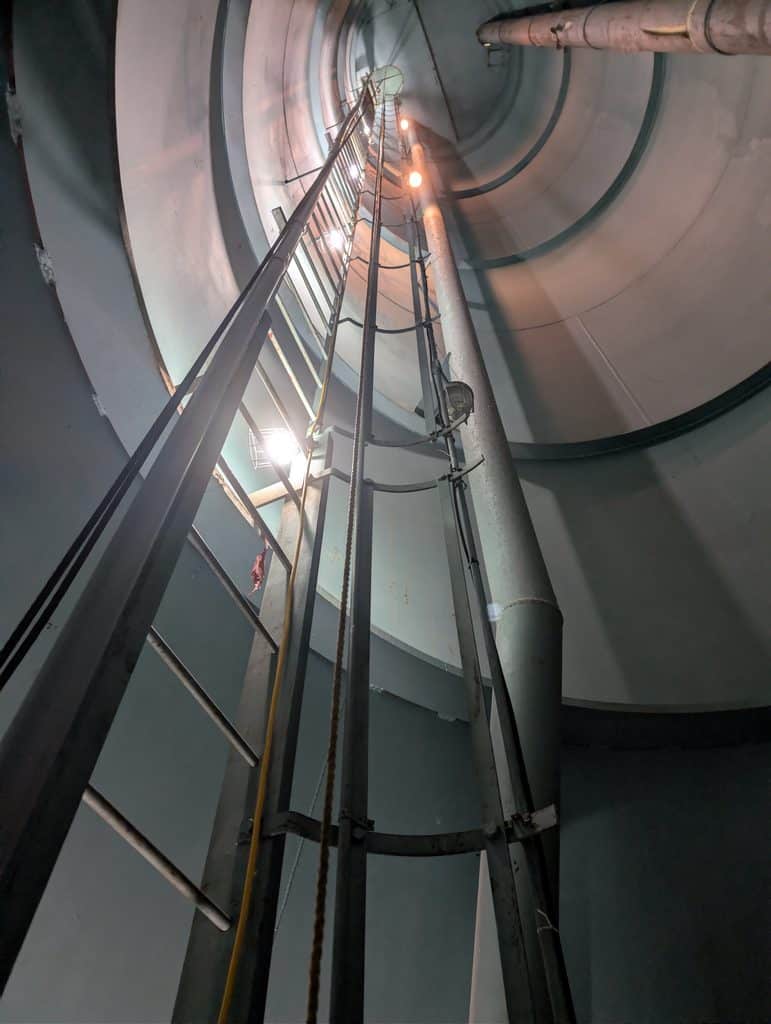
The interior water tower ladder still used a ladder cage, which OSHA officially reclassified as inadequate and no longer acceptable as primary fall protection on November 19, 2018, when its updated Walking-Working Surfaces standards took effect. Modern standards have shifted toward active systems, such as Personal Fall Arrest Systems (PFAS) and Ladder Safety Systems (LSS), that lock onto a lifeline. After a 3rd party removed the current cage, Northern Strands installed the new vertical lifeline and accessories, which is standard procedure for our team.
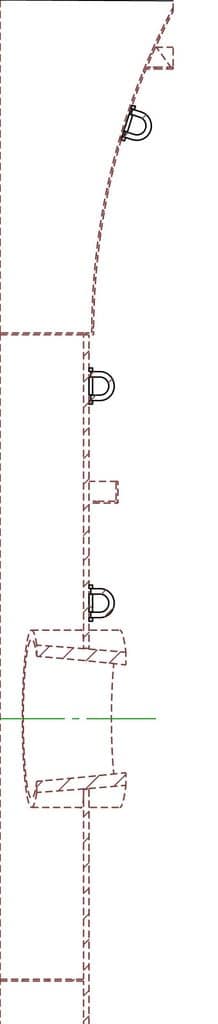
The more complicated area was the external fall protection points. After several conversations with the city and the companies planning to use the fall protection, we settled on an engineered design that met their needs. Our design included a guardrail/rope deflection rail at the top of the tower, plus ladder rungs and tie-off points above the access hatch so workers could tie off safely.
At around 86’ in the air, the rungs and anchors outside the access hatch on the side of the tower were installed with workers in an aerial work platform. These points made the access hatch safer to use and made maintenance below it easier for the workers.
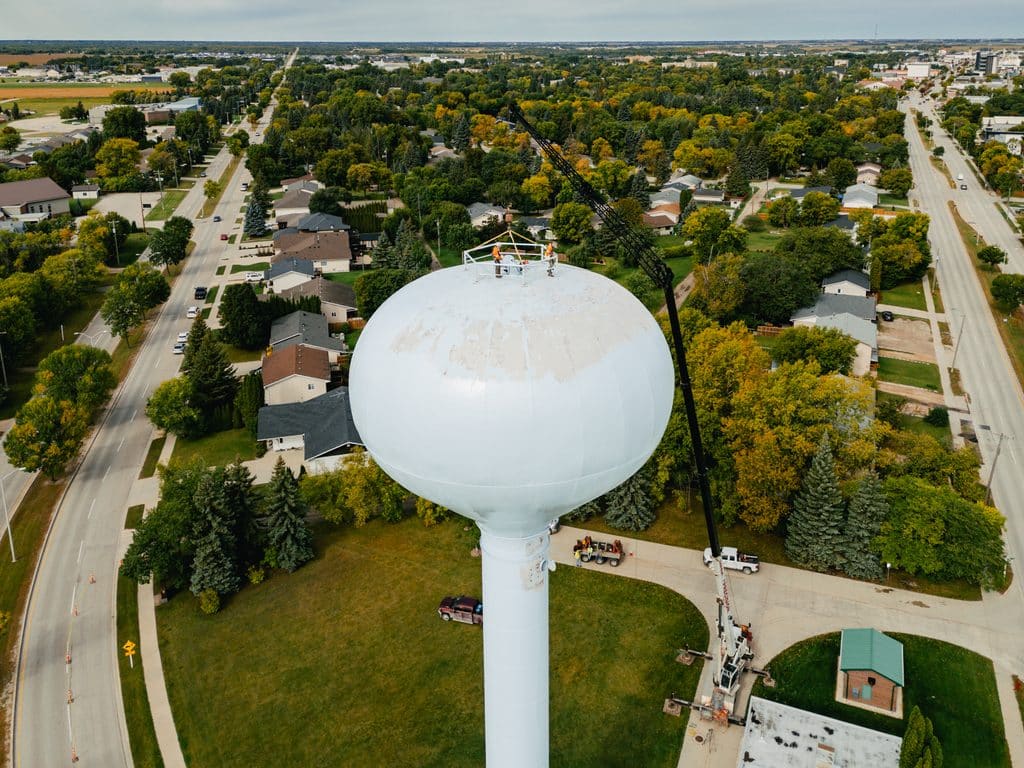
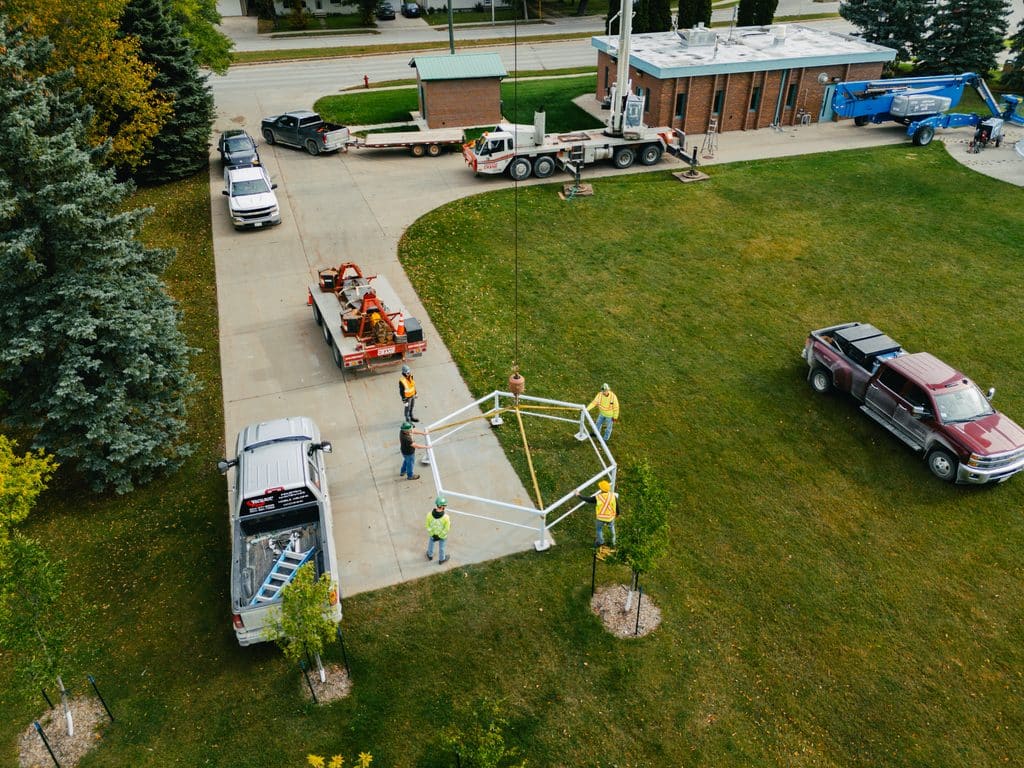
With the tower standing at over 150’ tall, a local crane crew was contacted to lift the new fall protection ring on top of the water tower. Once in place, the subcontracted welders got to work. After a few hours, the crane was no longer needed to support the railing, and the crew finished the welding.
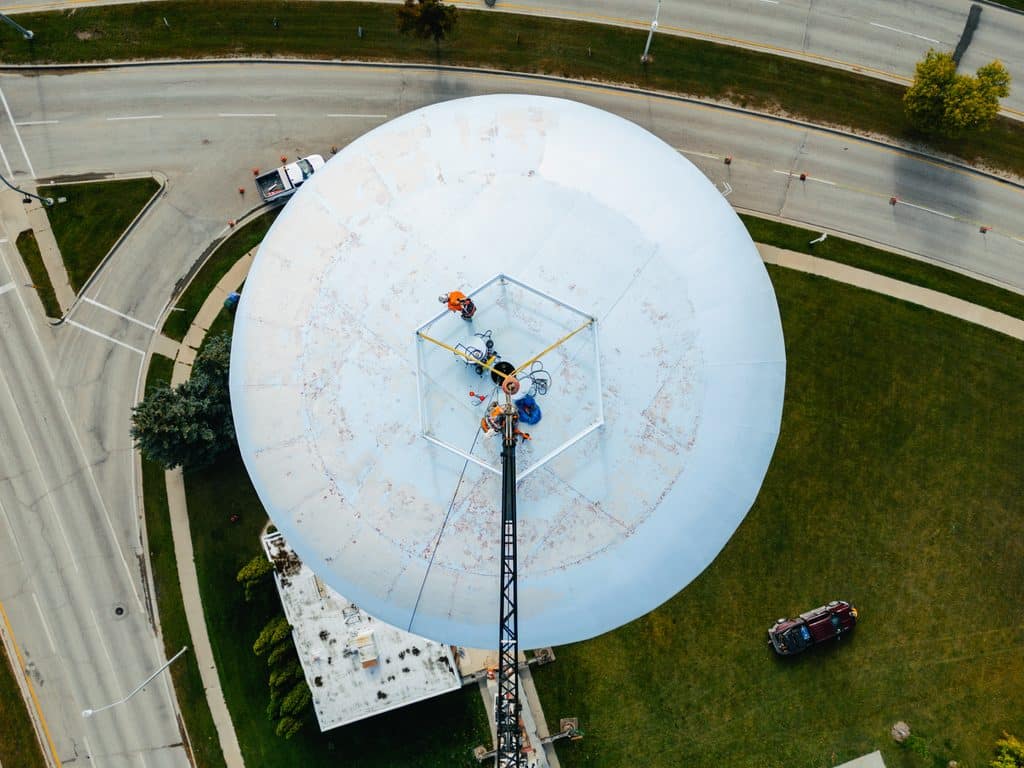
The new fall protection system provides a much safer work environment and will help keep the water tower maintained for years to come.